HR Compliance in UAE, Why It Matters More Than Ever
Human Resource compliance is no longer just about maintaining employee files. In the UAE, businesses must comply with employment laws, payroll regulations, WPS requirements, leave policies, employee documentation, Emiratisation rules, workplace safety obligations, and data protection requirements.
Failure to comply can result in penalties, legal disputes, payroll delays, employee dissatisfaction, and reputational damage.
Whether you operate in Dubai, Abu Dhabi, Sharjah, Ajman, Ras Al Khaimah, Fujairah, Umm Al Quwain, or any UAE free zone, maintaining HR compliance should be a top business priority.
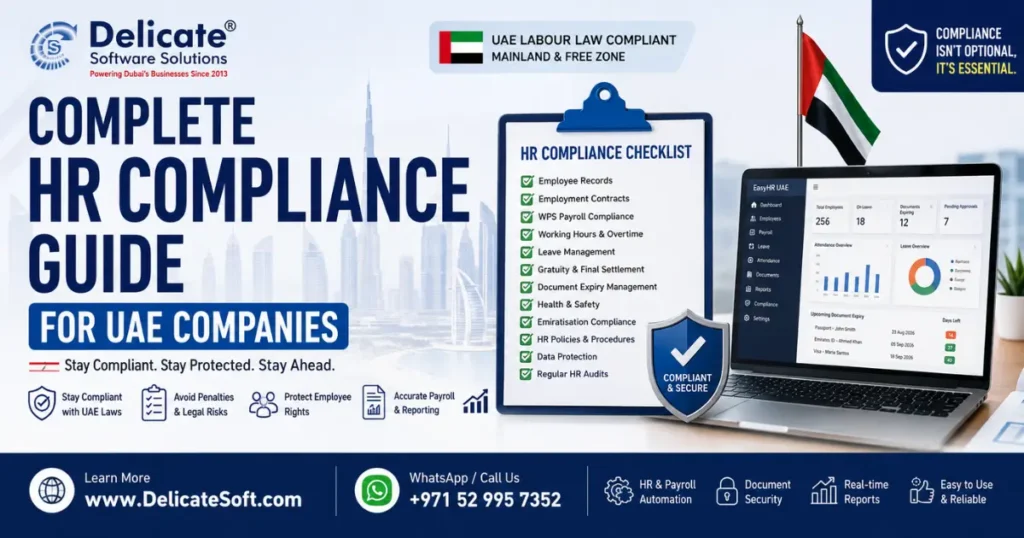
This complete HR compliance guide explains everything UAE employers need to know, along with a practical compliance checklist that HR teams can use throughout the year.
What is HR Compliance?
HR compliance means following all employment-related laws, regulations, internal policies, and government requirements throughout the employee lifecycle.
This includes:
- Recruitment
- Employment contracts
- Employee records
- Payroll
- WPS compliance
- Working hours
- Leave management
- Employee benefits
- End of service benefits
- Health and safety
- Employee data protection
- Visa and document management
- Labour law compliance
The objective is to protect both the employer and employees while ensuring smooth business operations.
Why HR Compliance is Important in UAE
Businesses that maintain proper HR compliance enjoy several benefits:
- Avoid government penalties
- Reduce legal risks
- Improve employee trust
- Process payroll accurately
- Maintain audit readiness
- Support business growth
- Improve operational efficiency
- Reduce HR workload
- Enhance company reputation
- Simplify employee management
UAE HR Compliance Checklist
Use this checklist to review whether your business is fully compliant.
1. Maintain Complete Employee Records
Every employee file should include:
- Employment contract
- Passport copy
- Emirates ID
- Visa details
- Labour card (where applicable)
- Educational certificates
- Contact information
- Emergency contacts
- Salary details
- Bank account information
- Offer letter
- Job description
- Performance records
- Promotion history
- Warning letters
- Leave history
Keeping all documents organized helps during inspections and audits.
2. Ensure Employment Contracts Meet UAE Requirements
Employment contracts should clearly define:
- Position
- Salary
- Probation period
- Working hours
- Leave entitlement
- Notice period
- Benefits
- Job responsibilities
- Termination conditions
Any amendments should be documented and acknowledged by both parties.
3. Stay Compliant with WPS Payroll
Most UAE mainland companies are required to process salaries through the Wage Protection System (WPS).
HR should ensure:
- Salary paid on time
- Correct employee details
- Accurate salary calculations
- Proper deductions
- Approved bank details
- Correct WPS file generation
- Timely salary transfer
Late or incorrect salary payments may result in government penalties.
4. Follow Working Hour Regulations
Maintain records for:
- Daily attendance
- Working hours
- Overtime
- Break times
- Weekend work
- Public holiday work
Accurate attendance records help resolve disputes and ensure payroll accuracy.
5. Proper Leave Management
Track every leave type accurately.
Common leave categories include:
- Annual leave
- Sick leave
- Maternity leave
- Paternity leave
- Compassionate leave
- Study leave
- Hajj leave
- Unpaid leave
Maintain leave balances and approvals for every employee.
6. Calculate Leave Salary Correctly
Many payroll errors occur during leave salary calculations.
HR should verify:
- Basic salary
- Allowances
- Leave duration
- Encashment rules
- Company policy
- Labour law requirements
Using payroll software helps reduce manual calculation errors.
7. End of Service Gratuity Compliance
Maintain accurate gratuity records throughout employment.
HR should verify:
- Joining date
- Contract type
- Basic salary
- Resignation or termination
- Service period
- Unpaid leave impact
- Previous settlements
Incorrect gratuity calculations can lead to employee complaints and legal claims.
8. Manage Employee Documents Before Expiry
Track expiry dates for:
- Passport
- Emirates ID
- Residence visa
- Medical insurance
- Driving licence (if required)
- Professional certifications
Automated reminders prevent compliance issues.
9. Maintain Accurate Attendance Records
Attendance records should include:
- Check in
- Check out
- Late arrivals
- Early departures
- Overtime
- Absences
- Shift schedules
Biometric devices and mobile attendance systems simplify this process.
10. Payroll Compliance
Payroll should accurately calculate:
- Basic salary
- Housing allowance
- Transport allowance
- Overtime
- Leave salary
- Bonuses
- Commissions
- Deductions
- Loan recovery
- Gratuity
- WPS file
Payroll reports should be retained for future audits.
11. Comply with Emiratisation Requirements
Eligible private sector employers should monitor:
- Emiratisation targets
- UAE national hiring
- Employee classification
- Required reporting
- Incentive programs
Maintain proper records supporting compliance.
12. Employee Performance Documentation
Maintain:
- Performance reviews
- KPIs
- Promotions
- Warnings
- Improvement plans
- Training records
Proper documentation supports fair employment decisions.
13. Workplace Health and Safety
Depending on your industry, maintain:
- Safety training
- Incident reports
- Risk assessments
- Emergency procedures
- First aid arrangements
- Fire safety compliance
Employee safety remains a key employer responsibility.
14. Employee Data Protection
Employee information should remain confidential.
Protect:
- Salary information
- Personal details
- Medical information
- Bank information
- Passport copies
- Emirates ID copies
Restrict access to authorized HR personnel.
15. Maintain HR Policies
Every company should maintain documented policies covering:
- Leave
- Attendance
- Working hours
- Remote work
- Code of conduct
- Disciplinary process
- Internet usage
- Anti harassment
- Grievance handling
Employees should acknowledge these policies.
16. Conduct Regular HR Audits
Review compliance at least annually.
Audit areas include:
- Employee files
- Payroll
- Leave balances
- Contracts
- Expiring documents
- Attendance
- WPS
- Gratuity
- HR policies
- Government compliance
Internal audits help identify issues before inspections.
Common HR Compliance Mistakes
Many organizations unknowingly create compliance risks.
Common mistakes include:
- Missing employee documents
- Expired visas
- Incorrect payroll
- Wrong gratuity calculation
- Poor attendance tracking
- Delayed WPS processing
- Missing leave approvals
- Incomplete employee files
- Outdated HR policies
- Manual spreadsheets without backups
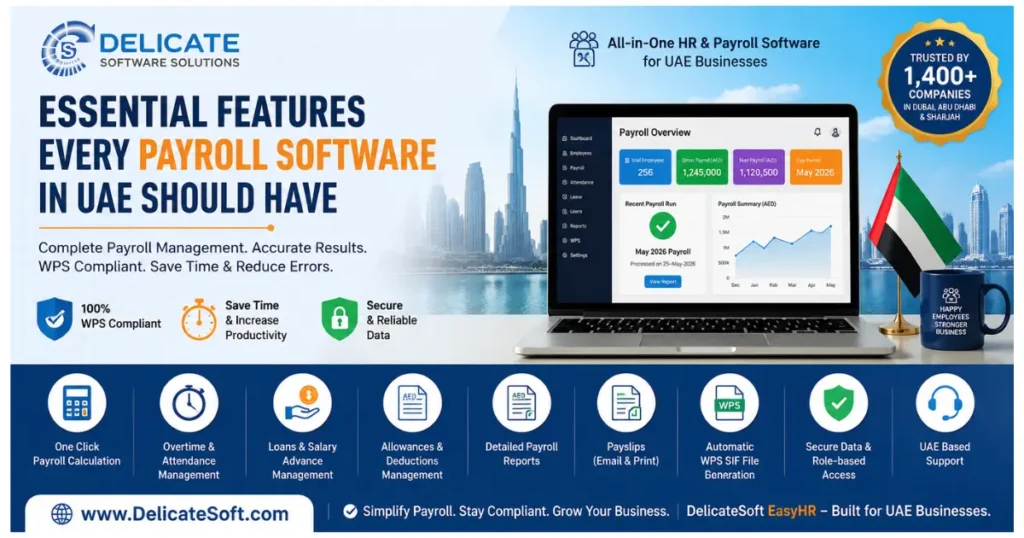
How HR Software Improves Compliance
Modern HR software automates many compliance activities.
Key features include:
- Employee database
- Digital employee files
- Payroll automation
- WPS file generation
- Leave management
- Attendance integration
- Document expiry reminders
- Gratuity calculation
- Employee self service
- Payroll reports
- Audit trails
- HR dashboards
Automation reduces manual errors while improving compliance.
HR Compliance Checklist (Quick Reference)
Use this quick checklist each month.
| Compliance Area | Status |
|---|---|
| Employee documents complete | ☐ |
| Employment contracts updated | ☐ |
| WPS payroll processed | ☐ |
| Payroll verified | ☐ |
| Attendance records accurate | ☐ |
| Leave balances updated | ☐ |
| Document expiry checked | ☐ |
| Gratuity records verified | ☐ |
| Employee files reviewed | ☐ |
| HR policies current | ☐ |
| Performance records updated | ☐ |
| Emiratisation requirements reviewed | ☐ |
| HR audit completed | ☐ |
Final Thoughts
HR compliance is an ongoing responsibility that requires consistent attention to employee records, payroll accuracy, statutory obligations, leave management, attendance, documentation, and internal policies. As regulations evolve and businesses grow, relying on manual spreadsheets becomes increasingly difficult and risky.
Implementing a centralized HR management system helps streamline day-to-day HR operations, improves record accuracy, and supports compliance with confidence. By adopting best practices and regularly reviewing your HR processes, your organization can reduce administrative burden, minimize compliance risks, and build a more efficient workplace.
If your company is looking for an easier way to manage employee records, payroll, leave, attendance, WPS processing, document expiry reminders, and HR reporting, exploring a modern HR and Payroll Software solution can be a valuable next step.